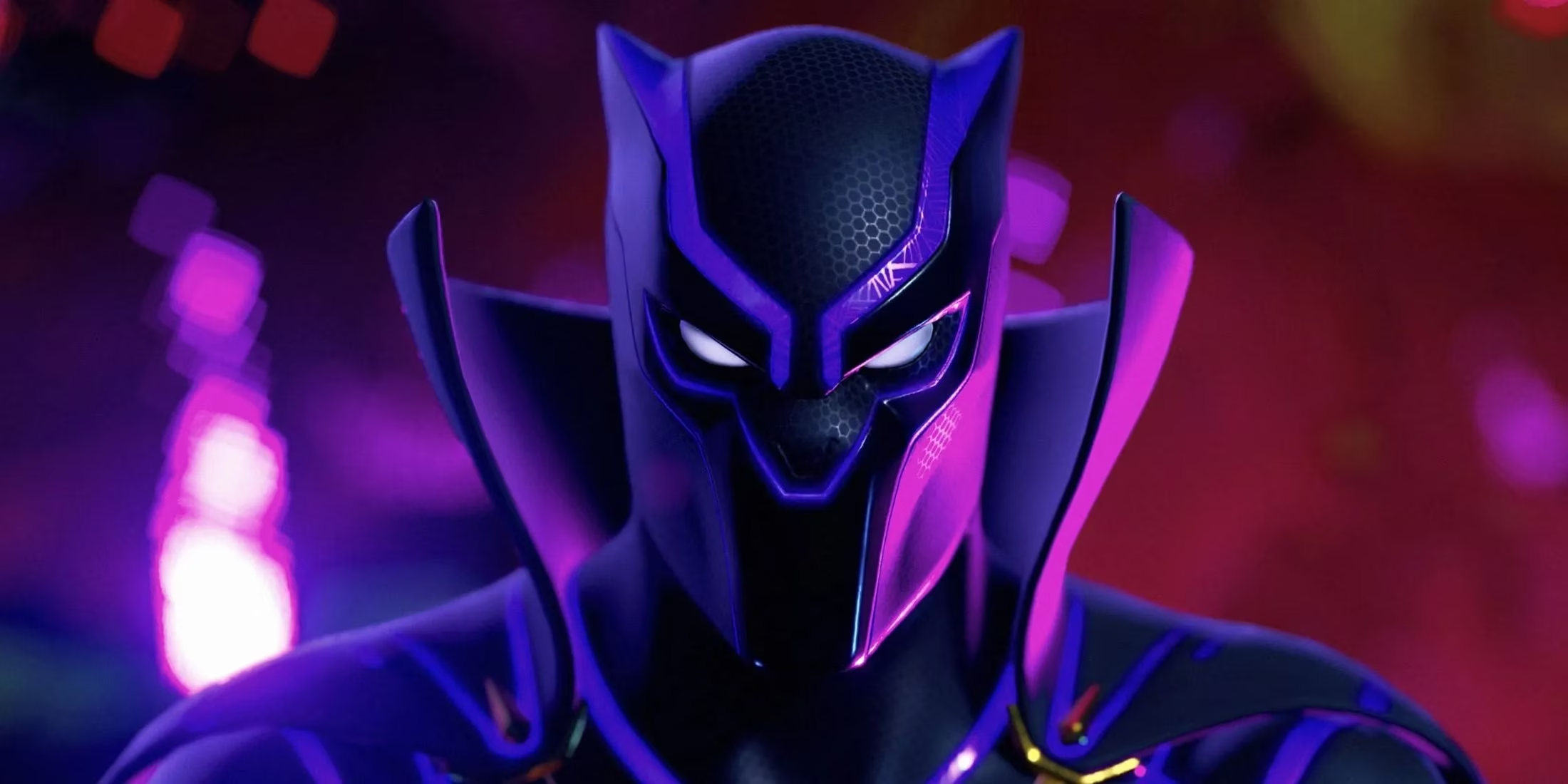
The sprawling, ever-shifting island of Fortnite is a digital palimpsest where forgotten lore and buried treasures resurface like ancient fossils in a riverbed after a storm. In 2024, during the Absolute Doom season that painted the map with Doctor Doom’s iron fist, a small, radiant moment was uncovered by the community—a hidden interaction between T’Challa and Shuri that continues to echo like a perfectly preserved note in a symphony of chaos. Even in 2026, with the game having morphed through entirely new realities, this quiet exchange remains a benchmark for narrative depth nestled within a battle royale.
The discovery itself came from Reddit user AStealthyPerson, who posted a screenshot on r/FortNiteBR capturing an unscripted dialogue trigger. When a player wearing the Black Panther skin approached Shuri—an NPC stationed at one of the season’s resistance outposts—the princess would greet her brother with a heartfelt line: “It is so good to see you.” She would then perform the iconic crossed-arms Wakanda Forever salute. The true magic, however, bloomed when the Black Panther player returned the gesture. Doing so unlocked the “Emotional Intelligence” Accolade, a mechanical pat on the back that felt like the game itself pausing to acknowledge a narrative seam less traversed.
This Easter egg acted as a small mirror reflecting the larger tapestry Fortnite had woven. The Chapter 5 Season 4 narrative was drenched in Marvel pathos, with fallen heroes memorialized in grim dioramas and Doctor Doom’s oppressive shadow swallowing landmarks. Amidst this, the sibling salute functioned like a firefly in a vault—tiny, defiant, and impossibly warm. It recalled earlier experiments in reactive cosmetics, such as the Ascendant Midas skin triggering familial dialogue with Jules, but the Black Panther-Shuri encounter carried the additional weight of real-world tragedy.
Chadwick Boseman’s passing had already woven a thread of melancholy through the MCU’s handling of Wakanda, and Fortnite’s tribute became an accidental shrine. Players in 2024 commented that the emote exchange “allowed brother and sister to share the screen one more time,” a sentiment that has aged like pressed flowers in a journal. By 2026, the Absolute Doom season is a memory archived in lore recap videos, yet new players still stumble upon the interaction while exploring creative maps or through the rare lobby appearance of these skins, and the moment routinely resurfaces on social platforms as a piece of gaming tenderness frozen in amber.
From a design perspective, the mechanic hinted at a roadmap that Epic Games would later explore more aggressively. The interaction was not a complex quest but a reactive emote check—a simple if-then statement that cost a handful of developer hours and returned immeasurable player goodwill. It sparked a wave of curiosity: what other hidden conversations lurked under the hood? Players immediately began brainstorming, with wish lists including a tense staredown between Spider-Man and Mysterio, or a diamond-hard mind-game between Cyclops and Emma Frost. While not all those dream exchanges materialized, subsequent seasons did introduce more contextual emotes and reactive dialogue trees, making the Black Panther-Shuri moment a seed that germinated into a small forest of interactive narrative design.
The emotional impact of the emote exchange can be broken down into a few key elements:
-
🌍 Cultural resonance : The Wakanda Forever salute is instantly recognizable globally, carrying themes of unity and remembrance.
-
💬 Simple, heartfelt dialogue : “It is so good to see you” transcends superhero bravado; it’s a line anyone would say to a loved one after a long absence.
-
🏆 In-game acknowledgment : The “Emotional Intelligence” Accolade gamified empathy, rewarding the player for engaging in a non-violent, character-driven moment.
Such features act as an antidote to the high-octane, often impersonal nature of a live-service shooter. They remind the player that beneath the digital skin and harvesting tools, there is a story being told in whispers.
Looking at the larger Marvel gaming landscape, T’Challa’s presence has only grown since 2024. Two upcoming AAA titles—an untitled Black Panther open-world game and the ensemble-driven Marvel 1943: Rise of Hydra—have both showcased the character in trailers throughout 2025. His Fortnite incarnation, meanwhile, continues to be a popular cosmetic pickup, and the Shuri interaction remains a quiet selling point for completionists who value sentiment over stats. The Vibranium-clad king stands as a symbol of endurance, both in narrative and in the hearts of players who found a moment of solace in a season built around tyranny.
Fortnite’s strength has always been its collage of disparate IPs, but the Black Panther-Shuri salute proved that stitching together universes can yield genuine texture, not just commercial patchwork. It’s the difference between a child’s sticker album and a mosaic: one is a collection of placements, the other a unified image composed of carefully chosen fragments. As we gaze into 2026, where the metaverse continues to balloon and crossovers are as common as air, this small interaction stands as a quiet manifesto—arguing that the most memorable digital worlds are not those with the loudest explosions, but those that dare to let a brother and sister say hello.
Research highlighted by TrueAchievements helps contextualize why Fortnite’s Black Panther–Shuri emote exchange resonated so strongly: players aren’t just chasing eliminations, they’re also motivated by bite-sized, trackable recognition like the “Emotional Intelligence” Accolade, which turns a character-driven interaction into a memorable progression beat that communities love to document and compare.