Back in the frosty final days of 2024, the Fortnite universe tilted on its axis with the arrival of Chapter 6 Season 1: Hunters. The update didn’t just hand players a new map and a handful of skins—it injected the island with a kinetic potion that made every warrior move like a squirrel on a caffeine rush. Two years later, in the vibrant chaos of 2026, those fluid, gravity-defying moves still echo through every skirmish, proving that this was no mere seasonal gimmick. The footage that surfaced right before launch showed off mechanics that felt less like a shooter and more like the lovechild of a bullet train and a parkour documentary.
🤸 The Four Moves That Rewired Muscle Memory
When the eight-second clip leaked by Fortnite insiders hit social media, it was like watching a master chef toss four unexpected ingredients into a simmering pot. The island’s inhabitants weren’t just sprinting and building anymore; they were becoming living pinballs, ricocheting off surfaces hidden in plain sight.
- 🧱 Wall Runs
A sideways sprint across vertical surfaces turned every cliff and building wall into a potential flank route. The first time a player chained a wall run into a shotgun blast, it felt as revolutionary as discovering that a bicycle could also swim.
- 👟 Wall Kicks
Bouncing off walls mid-scramble gave players a vertical pogo-stick effect, enabling escapes that slithered past opponents’ crosshairs like a dragonfly dodging a raindrop.
- 🚀 Launch Jumping
Suddenly the ground wasn’t just ground—it was a springboard. Launch jumping allowed fighters to vault over entire squads, turning messy encounters into aerial ballet.
- 🤸♀️ Ground Rolls
A combat roll on landing dampened fall damage and made hitboxes as slippery as a buttered eel. It invited constant tumbling, transforming flat terrain into a gymnastics mat where stillness was a death sentence.
These abilities weren't just additions; they were a complete rewire of the game’s rhythm. Movement became a weapon, and the map became a playground where every structure whispered secrets of new pathways.
🎭 A Fanbase Split Like a Well-Kicked Wall
The community’s reaction was as fractured as the very walls they were learning to run on. On one side, Zero Build advocates celebrated. They finally had the mobility tools to outplay aim-heavy foes without reaching for blueprints. Watching a player chain a wall kick into a launch jump, then ground-roll under a sniper’s line of sight, was like witnessing a minuet composed entirely of \u201cnope.\u201d
On the other side, purists grumbled that the classic Fortnite formula was being stretched thinner than a shadow at sunset. They worried that building, once the game’s sacred chess piece, was becoming a neglected cousin while resources poured into these acrobatic novelties. Arguments unfolded in comment threads that read like philosophical debates: Was this evolution or dilution? Both camps, however, secretly agreed on one thing—the new moves made Fortnite feel urgently alive again, even if they tugged at the seams of nostalgia.
🏯 Feudal Japan Meets Neon-Punk: A World That Breathed Myth
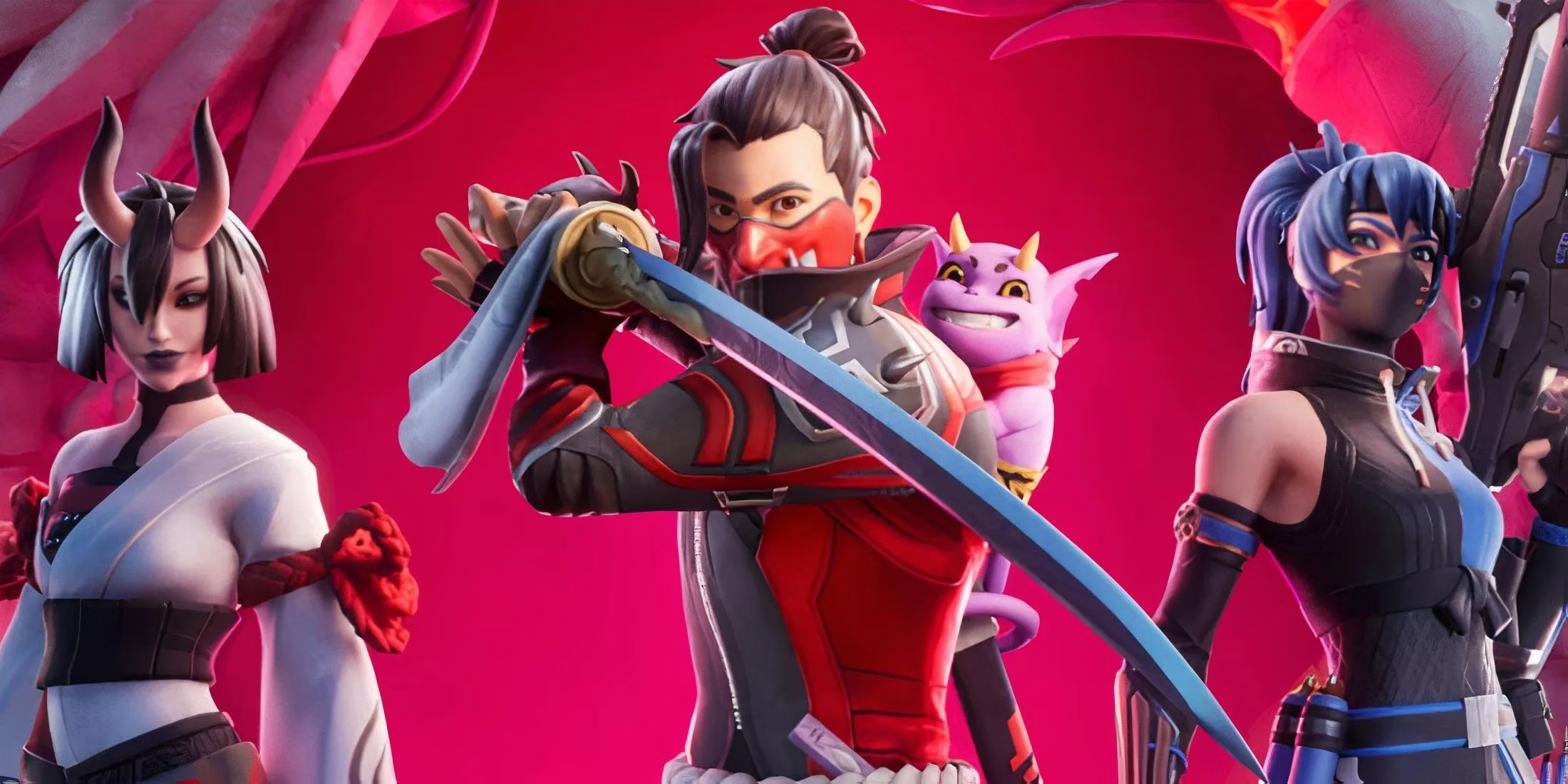
The movement overhaul didn’t arrive in a vacuum. Chapter 6’s map was a lush homage to feudal Japan, seasoned with cyberpunk circuitry. Think 12th-century Kyoto lit by holograms. Cherry blossoms floated near towering pagodas while purple steam belched from an industrial town’s twin towers, creating an atmosphere that felt like a samurai epic had been coaxed through a neon blender.
Leaked points of interest promised a demon arena where players could clash with AI-controlled oni, earning loot that glowed with otherworldly fire. The fusion of ancient aesthetics and futuristic mobility was deliberate magic: wall running on rice-paper screens and launch jumping over koi ponds made every fight a living ukiyo-e print. This world wasn’t just a backdrop; it was a dance partner for the new moves, rewarding explorers who dared to treat the environment as a vertical puzzle.
🧗 More Unlocks on the Horizon (Gone Prone, Then Beyond)
Even before the December 1st launch, dataminers had already unearthed whispers of what would follow. The ability to go prone turned every grassy hill into a stealth canvas, letting players vanish like a fox in tall grass. Rope swinging and a hook shot item promised even more three-dimensional insanity, though it would take a few seasons before they fully materialized.
Looking back from 2026, those early leaks were the first droplets of a monsoon. Prone mechanics evolved into sophisticated crawling tactics that reshaped competitive play. Rope swings became a staple in jungle biomes, and the hook shot eventually inspired an entire vehicle mod category. The foundation laid in Chapter 6 Season 1 was the first honest admission that Fortnite could be more than a shooting gallery—it could be a perpetual motion machine.
🔥 Why These Moves Still Matter in 2026
Two years later, wall runs and ground rolls have baked themselves into the game’s DNA like never before. Newcomers can’t fathom a Fortnite without the ability to rebound off a boulder into a shotgun slide. The debate has quieted, replaced by a shared awe at how smoothly the system integrated. In fact, the current season’s hoverboard racing tracks are designed explicitly around the muscle memory that Chapter 6 carved into players’ thumbs.
Epic Games has since layered on more movement tech—air dashes, slide cancels, magnetic boots—but none felt as seismic as that first December when the parkour revolution arrived. It taught players that a building wasn’t just cover; it was a trampoline drenched in potential energy. Looking back, Chapter 6 Season 1 wasn’t a diversion from the classic formula. It was the moment Fortnite decided to wear its battle royale crown with a parkour sneaker, sprinting full tilt into a future where standing still is the only real defeat.