In the ever-shifting tapestry of Fortnite, where islands rise and fall like digital empires, a quieter revolution has taken root. The meteors have fallen silent, the storm’s eye has calmed, and in its place, a humble brick has built an empire of its own. It is 2026, and what began as a whimsical experiment in December 2024 has blossomed into a living, breathing metropolis—the LEGO Fortnite Brick Life mode. No longer just a battleground, the Fortnite universe now cradles a sanctuary where millions gather not to fight, but to simply be.
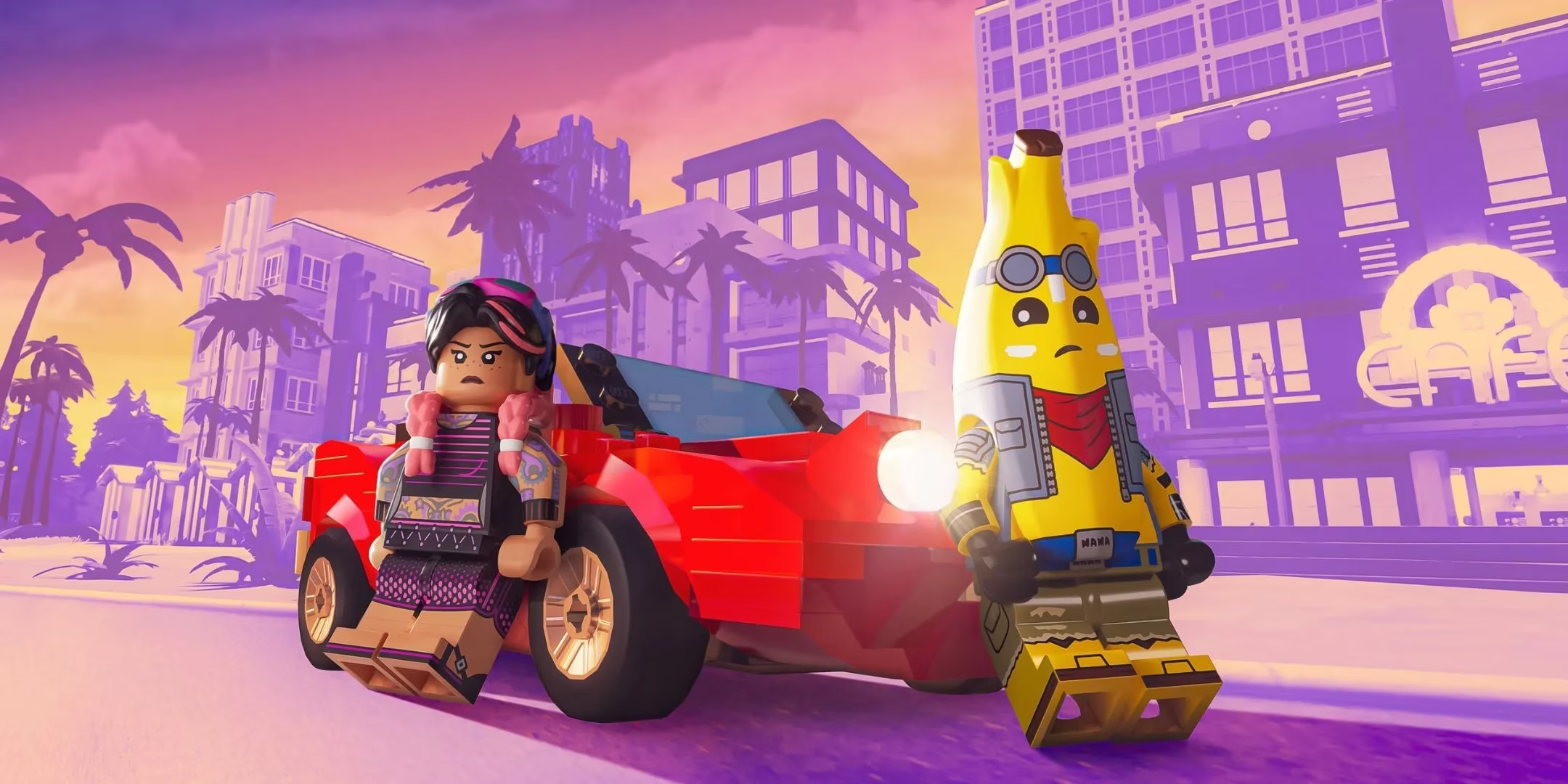
From the very first day, on December 12, 2024, Brick Life felt different. Epic Games unveiled a door to a bustling city that could host up to 32 souls in a single server—a cozy, chattering cohort, all free to write their own stories. The blueprint was simple yet profound. Design a home. Get a job. Hang out. The rules of engagement were replaced by the rules of engagement rings, pizza deliveries, and rooftop dance parties. It was a deliberate pivot from the quick-twitch reflexes of battle royale, a space where the only thing dropping from the sky was a gentle, plasticine rain and perhaps a new neighbor with a jetpack.
The city was alive from the first sunrise. The initial roll-out was an open invitation to explore; players could stroll along the boardwalk, take a swim at the beach, or rent an apartment in the heart of downtown. Jobs were the currency of identity, and early adopters eagerly donned the uniforms of a courier, a sushi chef, or a milkman, while others found their calling as a DJ, spinning tracks for the crowd at the rooftop soirée. These were not tedious chores but social contracts—reasons to cross paths, to laugh, to build a tiny plastic reputation in a vast, blocky world.
But a metropolis must pulse with change, and Brick Life was promised as an "ever-evolving experience." Through 2025 and into 2026, that promise has been kept with a steady stream of updates that have added layers of profound depth. New districts emerged from the foam sea, each with its own rhythm. The Arts Quarter buzzed with eccentric sculptors and painters, while the Industrial Docks brought a gritty, honest beauty, complete with new jobs like deep-sea fisher and crane operator. Resources became not just items, but the threads of a community tapestry; the wool from a farmer’s livestock, the lumber from a carpenter’s mill, and the circuits assembled by a technician all intertwined. Events, too, became the heartbeat of the city—seasonal festivals where the plazas filled with minifigures dancing under a shower of confetti, or mystery nights where a city-wide scavenger hunt sent waves of explorers through every nook and cranny.
The homes transformed from simple starter cubes into architectural confessions. What was once a single-room studio could become a split-level masterpiece with a panoramic view of the bay, a candy-coloured café on the ground floor, or a secret underground laboratory. The system, refined over the years, now allows for a staggering level of personalization. In 2026, a player’s residence is a story told in 1x1 bricks, a narrative of aesthetic taste, achievements unlocked, and rare decorative pieces gathered from years of city life. It is not uncommon to walk from a sleek, minimalist tower to a chaotic, maximalist palace where a dinosaur skeleton stands guard over a taco truck.
This quiet revolution did not happen in isolation. It paralleled and was enriched by the larger Fortnite metaverse. The return of Fortnite OG as a permanent fixture, a testament to nostalgia that once drew 1 million players in 20 minutes, created a fascinating duality. By 2026, a player can leap from the ruthless nostalgia of the old island into the serene stability of Brick Life in a single loading screen. This contrast magnified the appeal of both. The city became a decompression chamber, a place where a seasoned veteran, fresh from a Victory Royale, could teleport in to water their digital bonsai tree and simply breathe.
The social fabric itself has evolved in ways unimaginable at launch. Community-created groups have formed organized governments, running for office on platforms of better skatepark maintenance and more ice cream stands. Roleplaying has reached operatic levels, with 32-player servers occasionally transforming into full-blown theatrical productions, complete with villains in top hats, clumsy private eyes, and star-crossed lovers meeting at the glittering fountain. It is, in many ways, the peaceful echo of the chaos found in worlds like GTA Online, a testament to how deeply the human spirit craves storytelling, connection, and a shared stage.
Epic has nurtured this with a gentle, listening hand. The "ever-evolving" tag was not just marketing; it was a covenant. Feedback from the Brick Life community has directly shaped the cityscape. When players asked for more ways to interact with pets, the Animal Caretaker job and the Paws & Claws District arrived in the spring of 2025. When the thrill-seekers demanded more, a fully functional amusement park with a working roller coaster, bumper cars, and a Ferris wheel rose from the ashes of an old construction site. By 2026, the city boasts a dynamic economy where a player-run pizzeria can become an overnight sensation, all because of word-of-mouth and a beautifully assembled sign.
Technology, too, has kept pace. The 32-player limit, once a generous threshold, is now enhanced by fluid instancing technology that blurs the boundaries without losing the precious sense of intimacy. You can step from your private living room into a bustling public square without a hitch. The visual fidelity, though forever faithful to the LEGO aesthetic, has gained subtle, beautiful refinements—the way the sun’s last rays catch the glossy surface of a polished tile, or how the rain leaves little puddles that reflect the neon signs of the city’s entertainment district.
Beyond the jobs and buildings, the true currency of Brick Life in 2026 is memory. It is the afternoon a group of strangers gathered around a campfire on the beach and told improvised ghost stories until dawn. It is the opening night of a player’s art gallery, where a dozen minifigures solemnly studied abstract sculptures made of car tires and gemstones. It is the impromptu bicycle race down Main Street that ended in a pile-up of laughter, with no one eliminated. The mode has become a digital scrapbook, a chronicle of play without pressure.
And the future? Even now, weeks away from whatever comes next, the city hums with anticipation. A mysterious fog has been creeping into the suburbs, and cryptic blueprints for a "subterranean expansion" have been teased. Brick Life, now firmly rooted, seems ready to bloom once more. It stands as a quiet, colourful monument to a simple, radical idea: that within a game famed for its high-stakes combat, there is also room for a place where the only mission is to live, love, and stack bricks until the stars come out.
The legend of Fortnite continues to be written, not just through the guns and the gliders, but through the doors of countless plastic homes left slightly ajar, a warm light spilling onto the sidewalk, an open invitation to anyone who believes that a game can feel like home.